Niagara Daredevils History: From Blondin and Barrels to Modern Regulation
Explore Niagara's daredevil history in a refined chronological narrative, from 19th-century ropewalkers and barrel riders to modern legal enforcement.
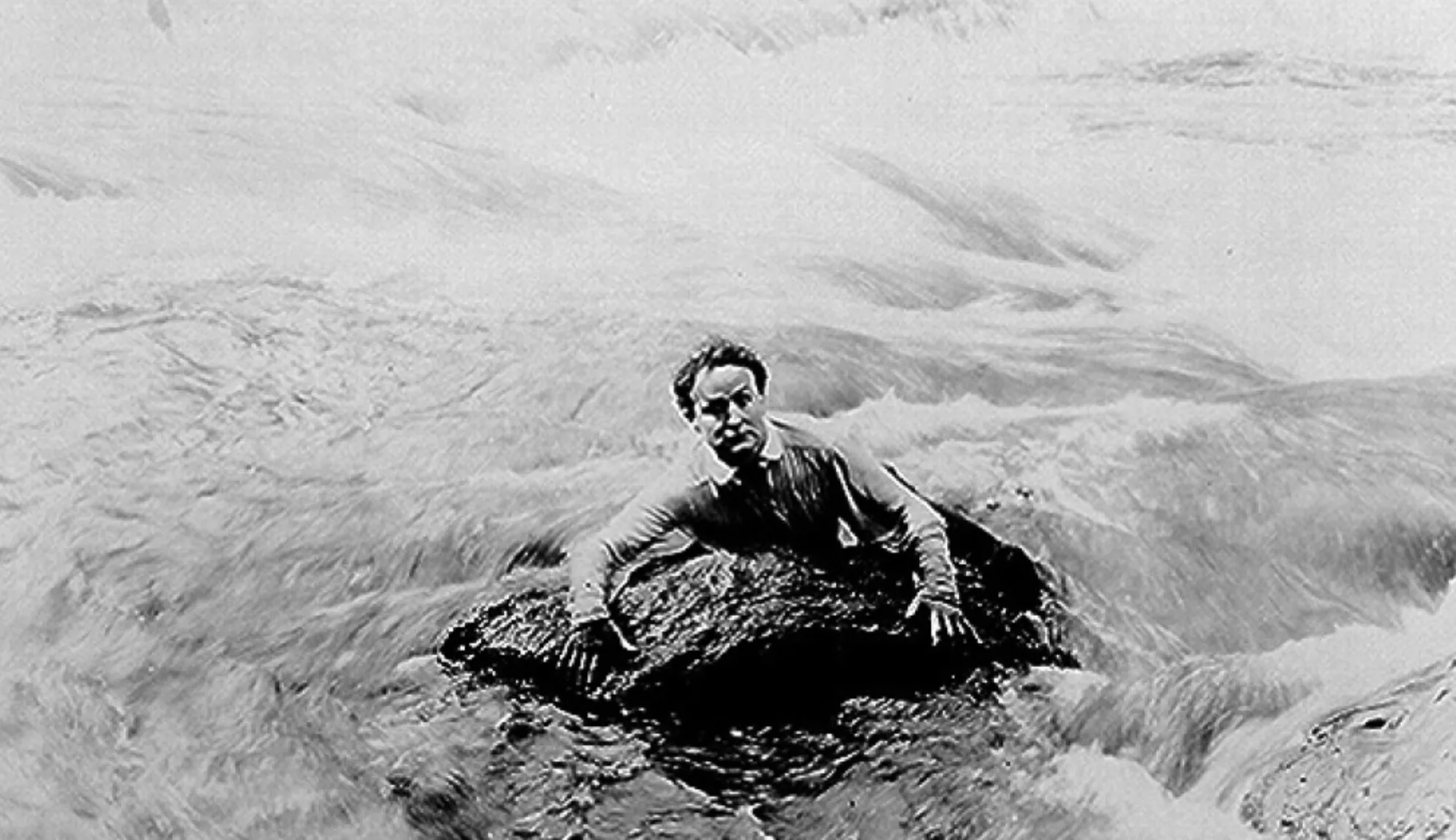
Niagara Falls has always been two places at once: a natural wonder of extraordinary power and a public theater where ambition repeatedly tested the boundary between courage and catastrophe. For nearly two centuries, daredevils have come to the gorge seeking fame, money, redemption, or simply the chance to be remembered.
This narrative history follows that arc from early promotional spectacles to the modern era of strict regulation.
At a glance: the five eras
| Era | Defining style | Public reaction |
|---|---|---|
| 1820s-1860s | Publicity experiments and first river feats | Curiosity, disbelief |
| 1859-1890s | Tightrope celebrity era | Awe and hero-making |
| 1901-1950s | Barrel engineering and repeat imitators | Fascination mixed with rising alarm |
| 1960s-1990s | Television-era stunts and legal conflict | Sensation and controversy |
| 2000s-present | Rare sanctioned acts, heavy enforcement | Historical interest over imitation |
1) The pre-celebrity years: stunt as spectacle (1827-1858)
Before individual names became famous, Niagara was already being used as a stage. Early organized stunts were designed to attract attention and visitors, often with little concern for ethics or safety by modern standards. In that atmosphere, the first jumpers and swimmers began testing the river itself, turning personal risk into public performance.
Why this matters historically
- It established Niagara as a global publicity engine.
- It introduced the idea of "performance against nature."
- It created the cultural template later daredevils would monetize.
2) The high-wire century begins (1859-1890s)
The daredevil narrative changed permanently when Jean Francois Gravelet, The Great Blondin, crossed the gorge on a wire and then returned with increasingly theatrical variations. He was not only a performer but also a master of narrative escalation: each crossing had to be more improbable than the last.
Soon, rivals and successors expanded the genre. William Leonard Hunt (The Great Farini) competed directly with Blondin's mythology. Maria Spelterini entered history as the most celebrated woman to cross the gorge by wire, demonstrating that courage at Niagara was never exclusively male.
In this period, daredevils became international personalities. Niagara became their headline stage.
3) From wire to water: the barrel era (1880s-1930s)
As ropewalking became familiar to audiences, attention shifted toward water-based feats. Barrels, reinforced capsules, custom boats, and improvised flotation systems promised survival through the rapids and over the brink. Some attempts succeeded. Many ended in severe injury or death.
The most influential milestone came in 1901 with Annie Edson Taylor, who survived a barrel plunge at age 63. Her survival was interpreted by imitators as proof that engineering could tame the Falls.
The engineering illusion
Design objective: absorb impact, preserve air, control rotation
Operational reality: violent hydraulic forces often exceeded design assumptions
4) Tragedies and the policy shift
As fatalities accumulated, authorities on both sides of the border moved from tolerance to enforcement. Public sentiment also evolved: what had been framed as heroism was increasingly seen as preventable loss.
| Recurring pattern | Typical failure mode |
|---|---|
| Overconfidence in barrel integrity | Structural rupture, suffocation, blunt-force trauma |
| Rapids navigation attempts | Entrapment, capsize, prolonged exposure |
| Experimental one-off devices | Unpredictable behavior under extreme flow |
This was the turning point from folklore to regulation.
5) Media amplification and modern stunts (1910s-1990s)
Aviation feats, parachute experiments, and television-era productions widened the daredevil playbook. Media made every attempt instantly bigger: larger audiences, faster fame, and stronger copycat risk. In parallel, enforcement intensified through penalties, restrictions, and tighter operational controls.
Three forces shaped the modern era
- Broadcast media increased incentive for spectacle.
- Law enforcement increased cost of unsanctioned attempts.
- Public opinion split between admiration and ethical concern.
6) Landmark survivals that still define the legend
- Annie Edson Taylor, whose survival became the template for barrel mythology.
- Bobby Leach, who survived Niagara but later died from unrelated complications.
- Roger Woodward, the child who survived an accidental 1960 plunge, one of the most extraordinary outcomes in Niagara history.
- Later repeat-attempt performers whose survivals reinforced the myth that preparation could overcome unpredictability.
Archival caution for readers
Niagara daredevil history is rich but messy. Newspapers, tourism publicity, and later retellings often conflict on measurements, timing, and technical details. Where possible, treat dramatic claims as provisional unless verified by primary records.
7) Why the daredevil age faded
- Cross-border legal controls became stricter.
- Hydrodynamic risk became better understood.
- Public institutions prioritized rescue prevention over spectacle.
- Cultural interest shifted from imitation to interpretation.
8) Niagara now: memory over mimicry
Today, Niagara preserves daredevil history through archives, guided storytelling, museum interpretation, and historical photography, not through encouragement of unauthorized attempts.
Strong pairings for history-minded visitors
- Historic bridge and gorge viewpoints
- Archival-photo comparison walks
- Museum-led context stops on tourism and engineering
Final reflection
The daredevil history of Niagara is neither pure heroism nor pure recklessness. It is a layered story of performance, technology, ego, media, grief, and regulation. The Falls themselves remain unchanged; what changed is how society chooses to meet that power.
If you want, continue and I will create a companion reference post with a strict year-by-year timeline and a clean survived/fatal/sanctioned classification table.
Over de auteur

Niagara Travel Editorial Team
Deze gids is gemaakt voor reizigers die praktische en eerlijke Niagara Falls-adviezen willen: wat de moeite waard is om te boeken, hoe je je dag slim indeelt en hoe je zowel de headline-attracties als rustigere uitzichtpunten zonder haast beleeft.
Tags
Comments (0)
Loading comments...